
Jordan Fields
Therapist, Raven's Fan, ADHD, CPTSD, Major Depressive Disorder

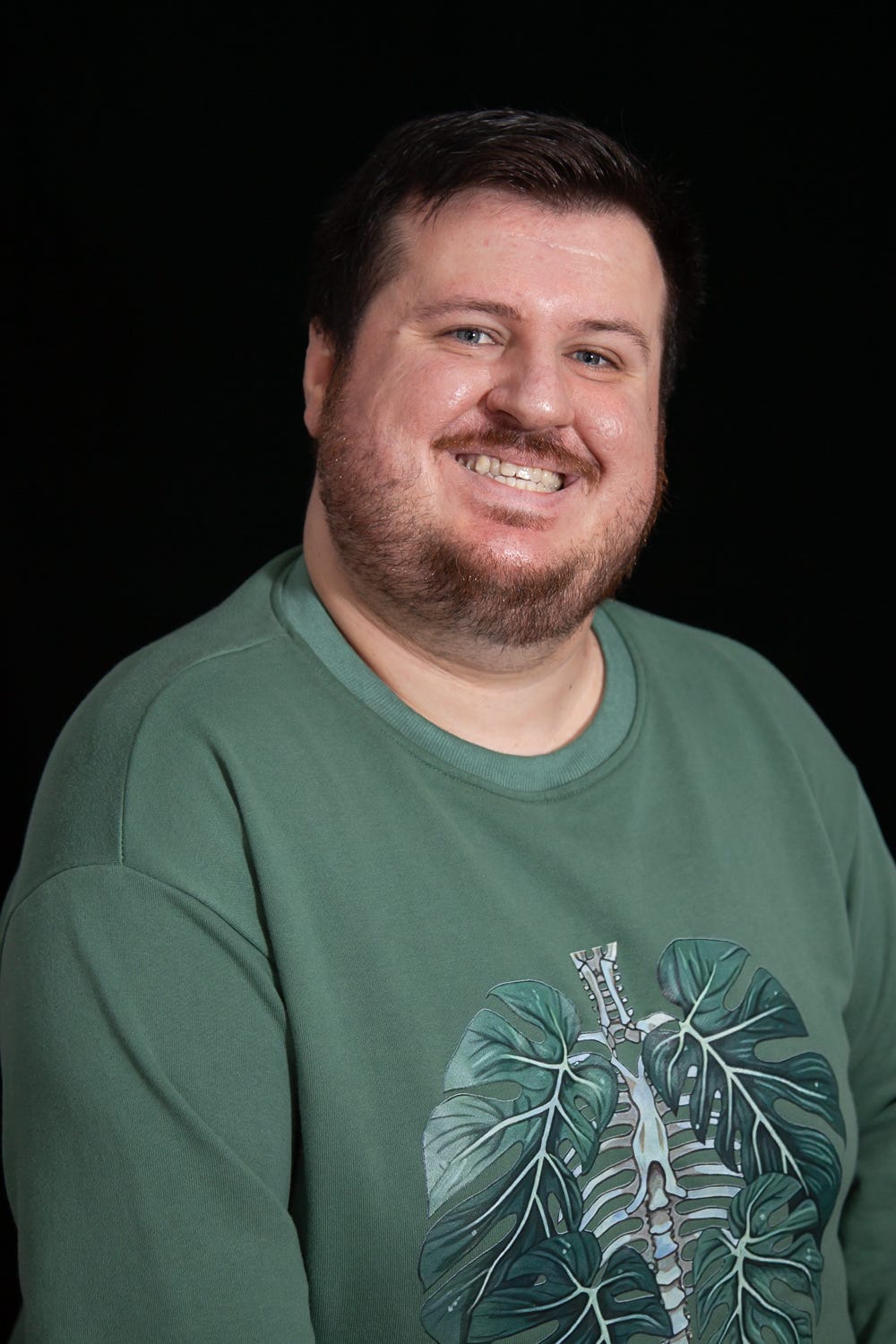
Jordan Fields is a social worker and therapist who lives with ADHD, major depressive disorder, and complex PTSD. Originally from Delaware, he relocated to Michigan to pursue a graduate degree in social work.
In our conversation, we talked about invisible disabilities, the difference between self-blame and self-understanding, and how his own mental health journey shaped his path toward becoming a social worker and therapist.
Would you mind sharing about your disability?
Jordan: I have a few different mental health diagnoses. I have a major depressive disorder, ADHD, and also complex post-traumatic distress disorder (CPTSD).
Laura: How was getting diagnosed for you?
Jordan: It has come in waves. So, first I was getting treated for depression and anxiety. Then over time, I realized that all these symptoms aligned with ADHD. I was just never assessed for it as a kid. Then around age 21, I finally got assessed for it and a diagnosis. Then, a few years after that is when I really started digging into some of my trauma experiences, and found that I met the criteria for the CPTSD diagnosis, too.
Laura: Do you have a good doctor or psychiatrist that you’re working with?
Jordan: I’ve been in mental health treatment care since I was 18. I’ve gone through several different doctors, therapists, psychiatrists. I’ve had good and bad ones. The people I’m working with right now, I’m really happy with.
Laura: Can you tell me a little bit more about your mental health journey?
Jordan: I definitely always struggled in school. I’m a very good student, if I can toot my own horn. I did pretty well in school, but it was always a struggle. I was always getting things in late, and completing things at the last second. It wasn’t until I went away to college for the first time, and really struggling in that first year that I started looking into my mental health, and realized I had depression. Later on, I realized I was struggling with these things that turned out to be ADHD.
Laura: I know there can be a genetic component to ADHD and neurodivergence. Are other people in your family neurodivergent?
Jordan: I’m not sure. I definitely see signs of it in my family, but I was never assessed for ADHD because my family just never thought about those sorts of things. So, it’s never been discussed. I can see it in some people, especially on my dad’s side, but they would never claim to have it.
Identifying as Disabled
Laura: When did you start to identify as disabled?
Jordan: I would say it started around when I was diagnosed with ADHD. I think that whole process made me really look at how much it was impacting my life and the way that I function. Realizing all the struggles I had in school, and getting motivation to complete projects and things like that, wasn’t due to myself or a moral failure, it was just that my brain works differently.
Laura: Do you feel like CPTSD is more disabling or as disabling as ADHD? Do you feel like it’s even fair to compare them?
Jordan: Yeah, I think it is fair. I think it’s equally disabling in different areas of my life. ADHD is more so in my work, and in my school, and my general motivation. PTSD definitely affects my social life more. It makes it harder for me to open up to people, trust people, things like that. So, it’s something I also have to work around just in that other area of my life.
Laura: How do you feel that the major depressive disorder disables you?
Jordan: I feel like that comes up in waves. I’ll have a day or two here and there where I’m so down, and struggling so hard to get out of bed, or get motivated. I’ve had to develop coping skills just to get through that. Also, having to get comfortable allowing myself to take a day off if I need it, just because I’m struggling, and not feel guilty or like I’m letting people down. It’s been a huge process for me.
Laura: Could you talk about your experience having an invisible disability?
Jordan: I think it has been hard on a personal level, because I’ve had trouble accepting it for myself. Especially growing up, people not recognizing or even considering that I had things going on inside that were causing me to struggle. My parents would never bring it up. It was never, maybe he has ADHD; maybe you should bring him in to check it out. It was just, he needed to try harder, he got lazy, you know, all that stuff. Which, I can understand because they just didn’t know. I don’t blame them for it, but also, I wish somebody could have stepped in and picked it out.
Laura: Are you able to talk to your mom about these things now?
Jordan: Yeah, when I was in college and really struggling, I was in a really deep, dark place. Up until that point, I never really knew how to talk to her or ask for help. It took me getting to that point to finally reach out to her and be like, hey, I’m really struggling. I think having that conversation and experience opened her eyes up to how she had kind of let me down as a parent growing up, you know? She’s my biggest support person now.
The Road to Social Work
Jordan: I’m from Baltimore, Maryland. I started out my undergraduate degree at the University of Delaware, close to my home, but a little bit far away. I ended up really struggling and moving closer to home, where I finished my degree in psychology at Townsend University. Then, I came to Michigan for grad school at Wayne State.
I knew I wanted to be a therapist. My original goal was to go into clinical psychology, or something along those lines. Through completing my undergrad degree in psychology, I learned I was not happy with the philosophy around it. It was very corporate and very medical. I prefer social work where it’s more person-focused, and that’s always been my philosophy. I feel like social work fits me a lot better.
Laura: Did any of your social work education inform your own journey of identifying as disabled?
Jordan: Yeah, I think in my practice, and then, in my life in general, I am trying to be as authentic as possible. I think that’s really important in therapy, especially, to be authentic in your work. I think accepting those things about myself, that I’ve either just not thought about, or just been kind of suppressing, has been a big part of that, too.
What do you like to do for fun?
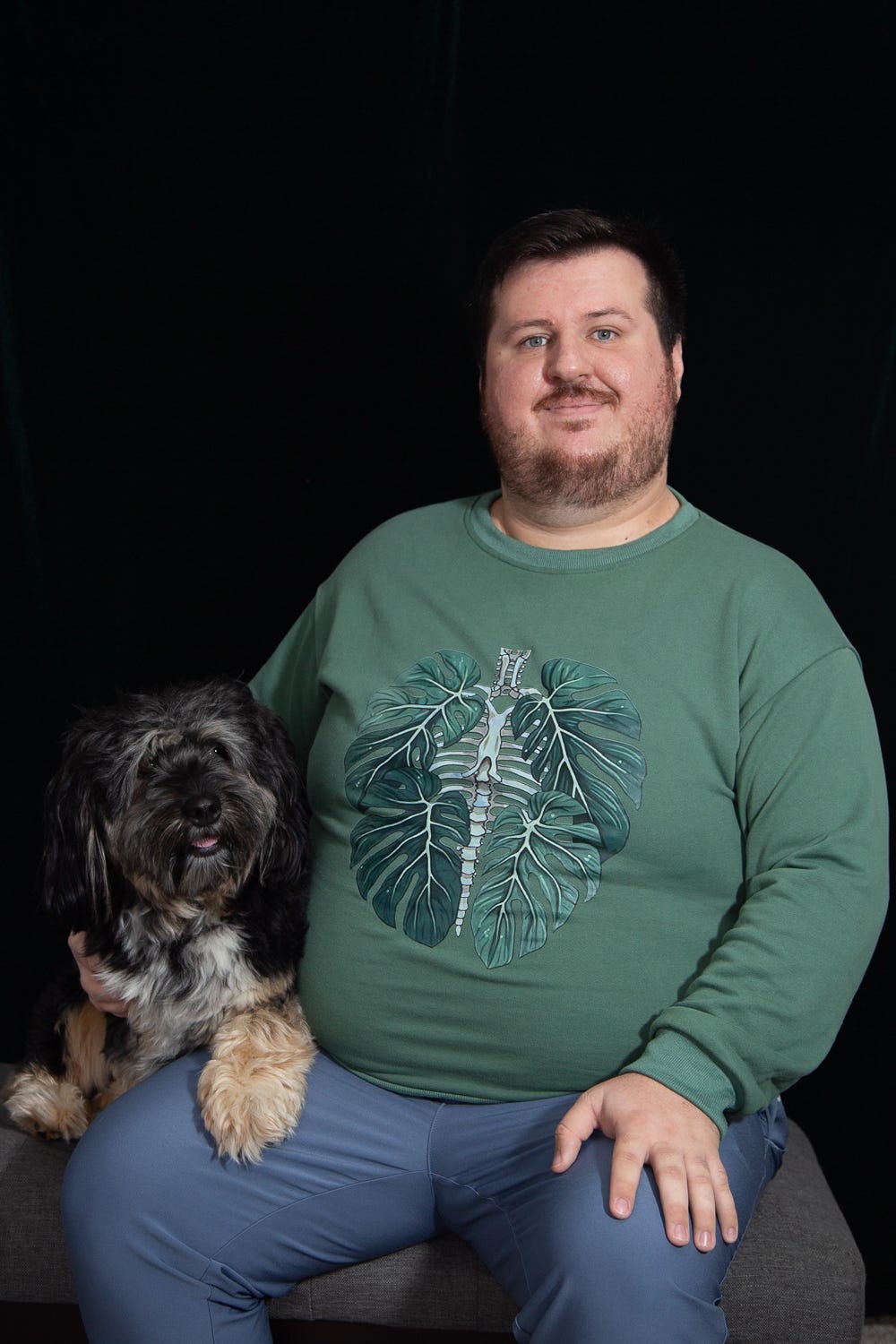
Jordan: I like hanging out with my dog, Arlo. I just adopted him in August, and it’s been really fun getting to know his personality. When I’m at home, I like to cook. I like to practice my instruments- bass guitar, drums, and a keyboard. I like to read and play video games. I like to explore. Having ADHD, I kind of get sick of the same thing. If the weather is nice, I like to go outside and play sports with friends, or just go on long walks with Arlo.
Laura: Which sports are you into?
Jordan: I like to watch football and basketball. Being from Baltimore, I’m a huge Ravens fan. I like to play basketball, soccer, football, or even just toss the football around.
What motivates or inspires you?
Jordan: Right now, it’s my work. I really love the work I do with my clients, and getting to see the progress they make. That’s also what’s motivating me to work on myself to show up and be a positive influence. Sometimes, I’ll say something to a client, and I’m like, why haven’t I told myself that? I should be nicer to myself.
Laura: I’ve heard that often people who become therapists were the therapists in their families growing up. Do you feel like that was true for you?
Jordan: Not so much with my family. With my friends, definitely. I was the one that people could talk to. My family was always sort of closed off, so it was more me thinking about my own feelings and kind of processing on my own.
Laura: Do you have any siblings?
Jordan: I’m an only child, and I grew up mostly in a single-parent household. My dad was around until I was 15, and then it was just me and my mom.
Laura: I bet she misses you.
Jordan: We just saw each other for Thanksgiving, so that was really nice, but yeah. We call each other once a week and catch up. We’re very close. We were both living in Baltimore before I came to school at Wayne State in Michigan. After I moved, she was like, I’m just gonna go to the beach and live there. It’s an amazing place. She’s got her own dog, she loves it there.
What change would you like to see for disabled people in the future?
Jordan: I would just like to see people be more accepting. I think the discussion around disability, and especially mental health, from my perspective, has gotten a lot better. There’s still a lot of people who struggle with understanding disability, or being comfortable with disability, or just being accommodating in general. I think everybody just needs to give each other a little more slack, and be a little more gracious.