
Nicole Heikkilä-Popkin
Professional dancer, cleft palate, hearing loss

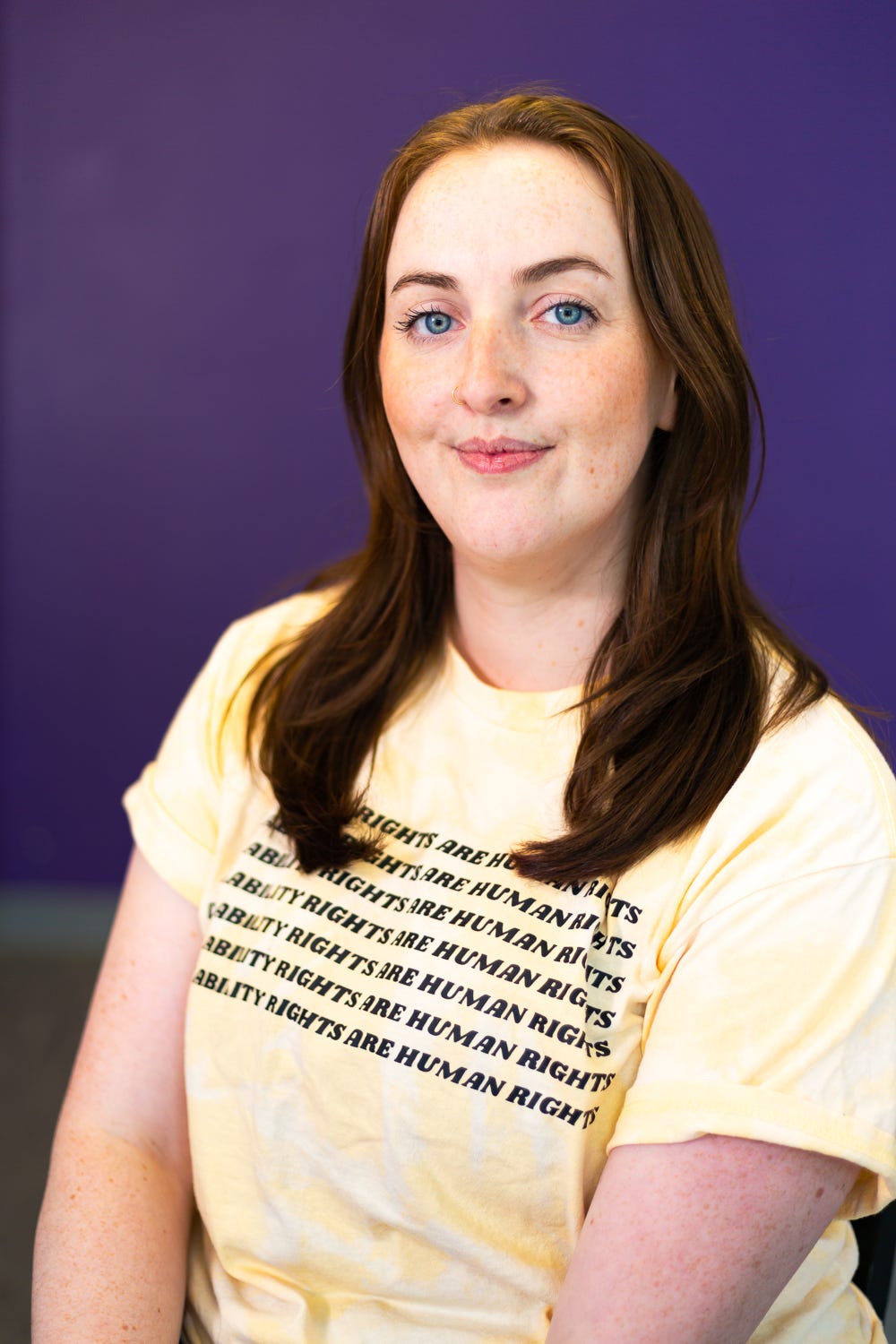
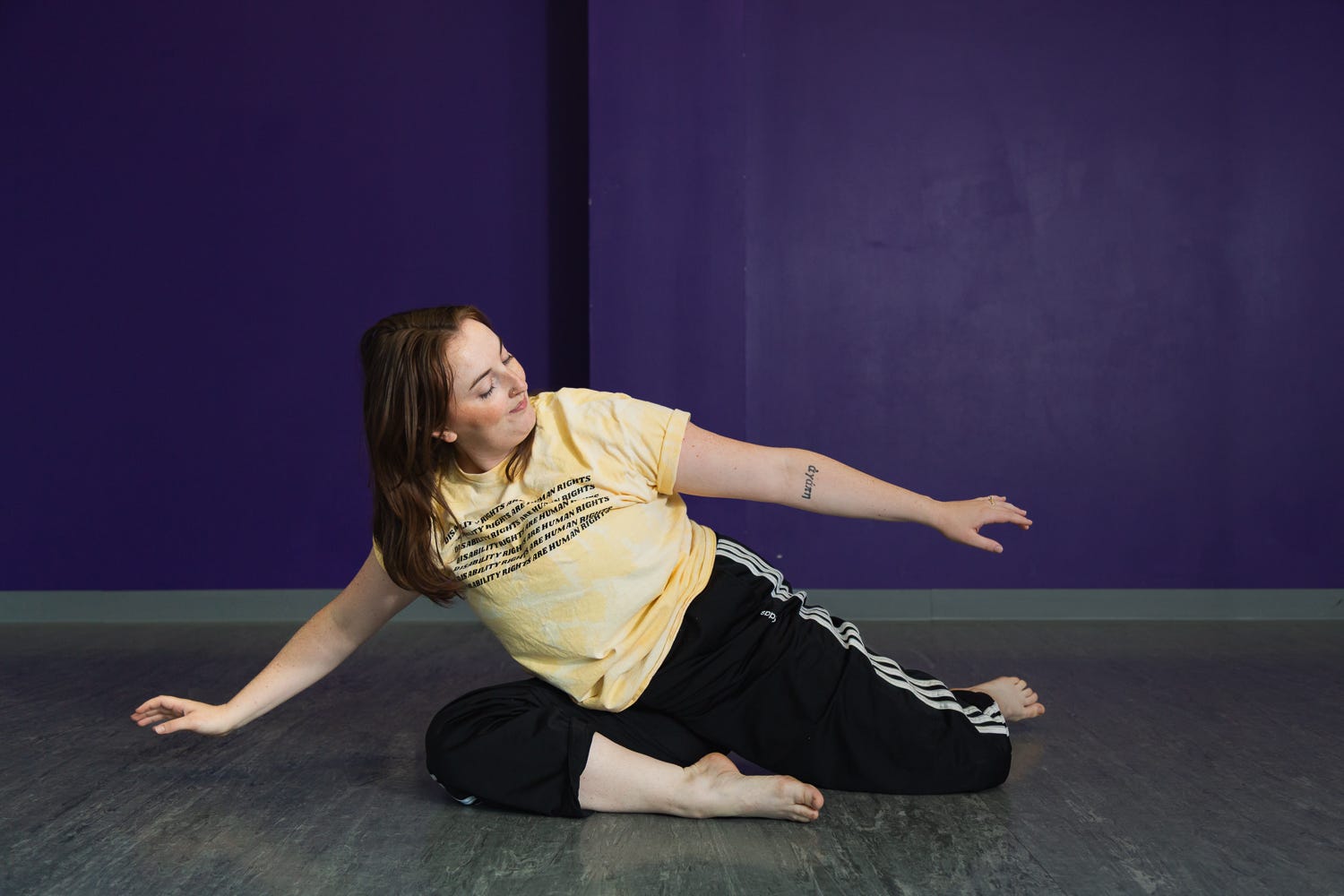
This interview features Nicole, a professional dancer, passionate teacher and theater-technician who navigates life with a cleft palate and hearing loss. The conversation explores the intersection of art and accessibility, growing up different and her inclusive pedagogy. Nicole speaks poetically about her journey towards disability pride. She discusses the profound impact of disability culture and her mission to dismantle internalized ableism.
Would you mind sharing about your disability?
Nicole: I was born with a cleft palate, so I don’t have a uvula. So that’s like, my party trick. Instead of that dangly thingy in the back of your throat, I have a hole. So the back of my mouth didn’t form completely, and then I had tubes, from probably about 6 months to age 18 or 19. They said I was gonna have to have them forever, but I stopped getting ear infections, so they took them out.
But from all those ear infections, I have scar tissue, so I am hard of hearing. I also have a bone growth in my left eardrum. So my left ear has more severe hearing loss, whereas my right is, like, moderate. I have had hearing aids since college, when I was about 20.
Laura: Was that a challenge in school for you?
Nicole: I never thought so. My mom always made sure I sat in front of the class. So, she kind of set it up where I didn’t have to run into thinking about that. I did have this one art teacher that would almost make fun of me for not hearing her. And I was like, “You know, I can’t hear her very well.” She was kind of mean about it. But I loved art and she just wasn’t the nicest person. That’s the only time I really thought about it, until I actually got my hearing aids.
Now, I’m like, “Wow, I can hear the water running three rooms away,” or “I can hear the traffic outside.” But it’s nice because I can take them off and be in a quiet zone as well. When I’m teaching my dance students, and they get kind of rowdy, I just turn my hearing aids down.
Laura: Did your doctors tell you you needed hearing aids?
Nicole: Yes. I had the same ENT from when I was born until about like 21, because I was on Children’s Special Healthcare Services of Michigan, and that ran out by the time I turned 21. The ENT always suggested the hearing aids, but I think the first time they suggested it was when I was in eighth grade. At that point I had glasses, I had braces. I was like, “Mom, I can’t do something else for these middle schoolers to make fun of.”
I thought I’d have to get them before my insurance runs out, because they’re pricey. Now that I have them, they do help. When I tell people that I have them they say they can’t even see them. My first pair were brown to match my hair. These are my second pair that I actually got through the state’s employment offices. It’s a program for people with disabilities to get whatever they need to get a job or keep a job. My other job is theater tech, so I work with lighting and sound and I need hearing aids for that. But once these go bad, I’m not sure what I’m gonna do.
Laura: Would your basic insurance not cover it?
Nicole: I’m not sure, but I was really excited when they ruled that you could do over-the-counter hearing aids. So, I’m hoping as it’s more accessible, it’s also more affordable. The hearing aids I have now are very fancy. They can connect to my Bluetooth.
Laura: How do you know when it’s time for new hearing aids?
Nicole: I have a friend who has a cochlear implant and we have been talking about that. The doctors kind of wait for us to be like, “Hey, these hearing aids that I’ve had for a really long time aren’t doing it anymore. They’re breaking or not charging.” I feel like technology for hearing aids is pretty behind, because there’s not a push for it. It’s like an iPhone. If everybody has one, they’re gonna come up with a new one every six months. It’s gonna keep getting better and better.
Laura: Are there any other coexisting conditions with your disability?
Nicole: Not specifically. I did a lot of speech therapy growing up. Now, though, I am on a new journey. I have an appointment with a rheumatologist in one month. I’m counting down the days because I’m having a lot of joint pain. My doctor left the practice, so I had to get a new one. So, I just went to my husband’s doctor because I knew he took our insurance.
I was nervous because it was my first male doctor ever. I thought, “He’s not going to take me seriously.” Or he might say, “You need to drink water and exercise.” But he ran some blood tests and something showed up on them. So, it’s making me feel better that I’m not just tired or lazy.
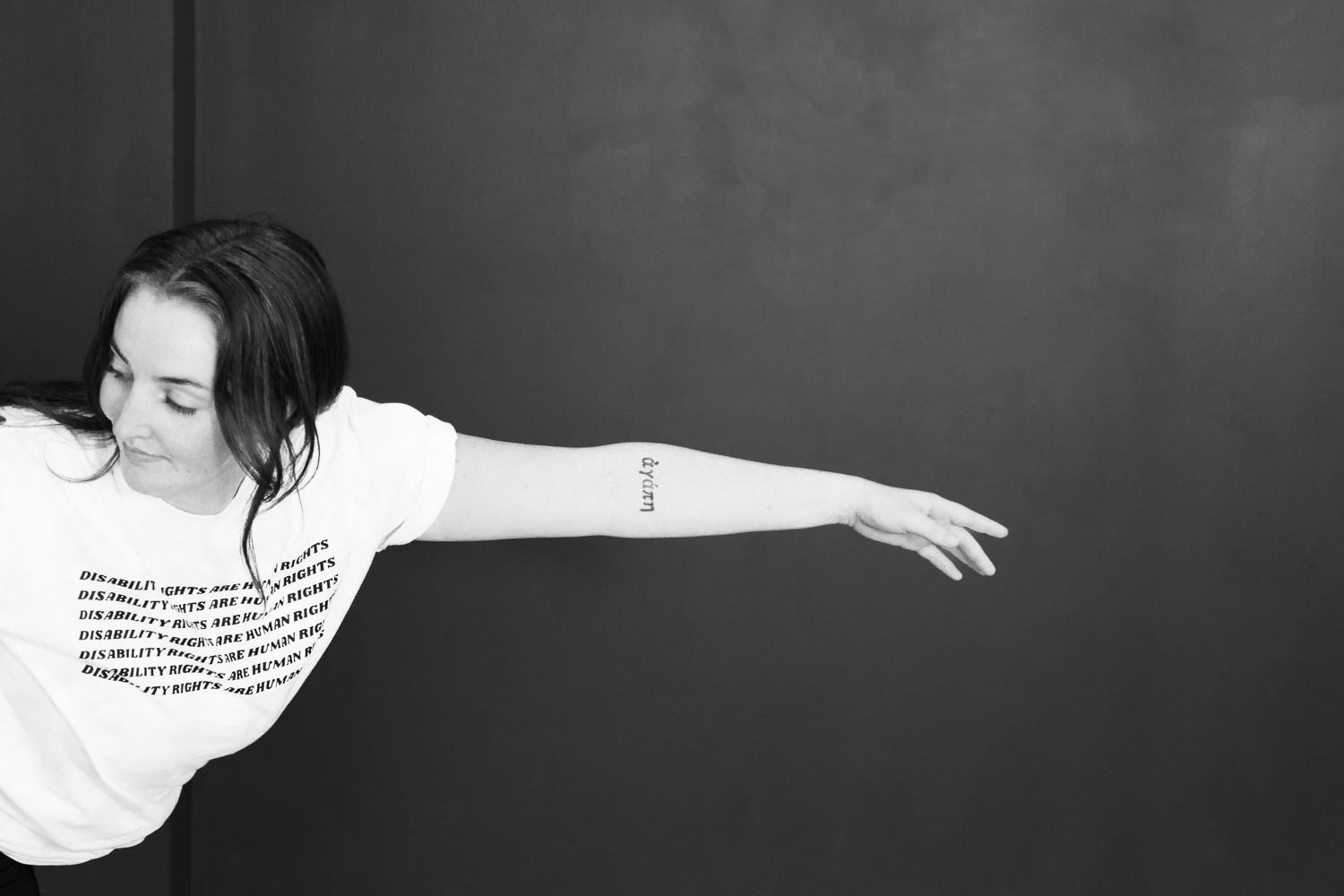
The internalized ableism is real. But that’s why I like immersing myself in disability culture and accepting that my body is different from other people’s. Especially being a professional dancer. I love that there are disability dance companies, like Axis in California or Dancing Wheels in Ohio. Danceability, through Detroit Disability Power has really opened my eyes to what dance can be.
I’m even going to take a class through a national organization on teaching students with disabilities, so that I can create a program for my students. I always say, the biggest part of my job is advocating that dance is an art and anybody can dance. The actual teaching of the classes is secondary.
What do you like to do for fun?
Nicole: I feel like I turned all of my hobbies into jobs, haha. For fun, I dance for myself. I try to learn new things. I like painting and drawing. The last thing I actually drew was a self-portrait for Disability Pride Month. I drew myself meshed together with the new disability pride flag. Most of the time I just like sitting on the couch, watching TV with my cat.
What motivates or inspires you?
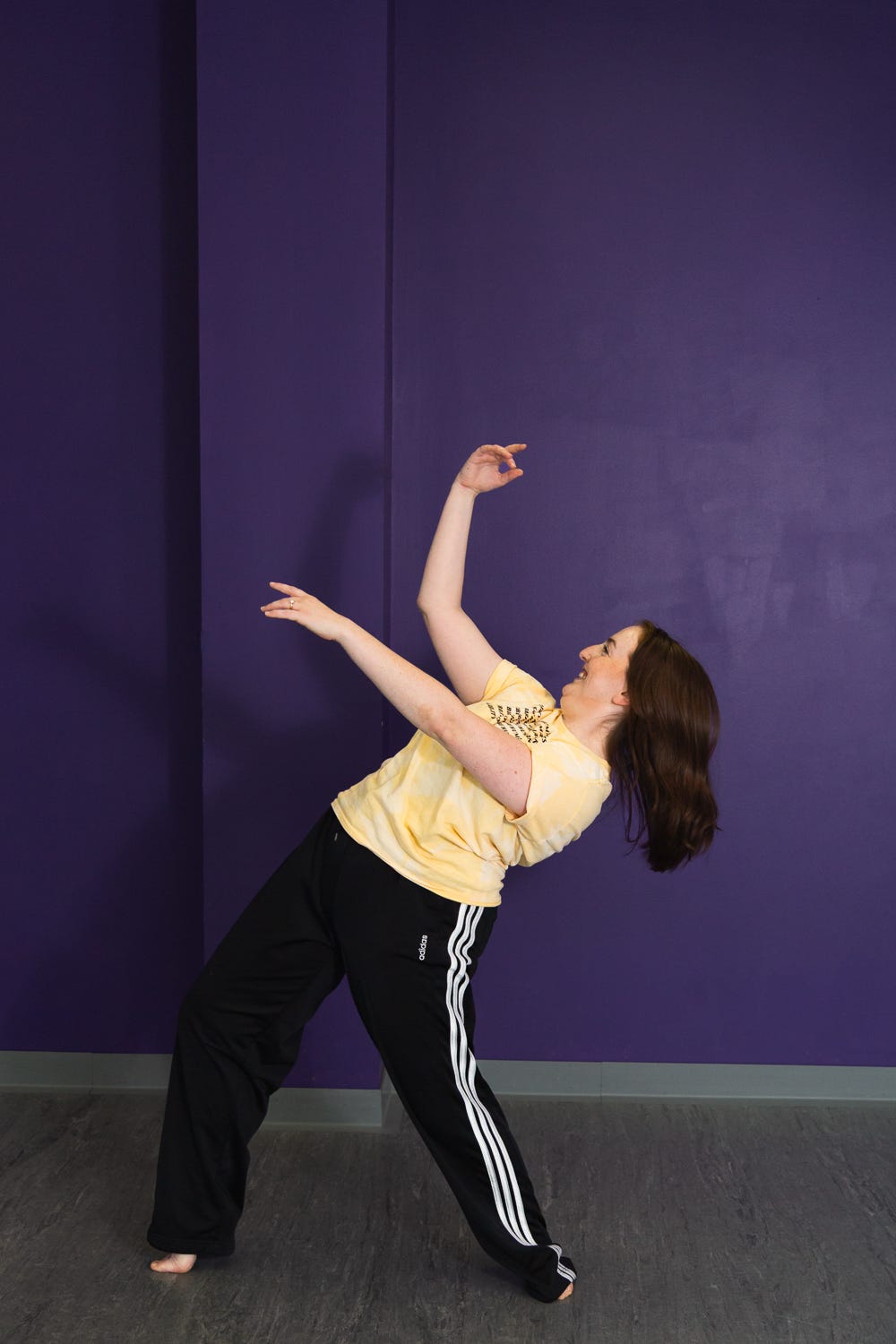
Nicole: I think because I love dance so much, and I love sharing dance, my motto has always been “Everybody can dance.” So when I’m talking to someone at the grocery store, and I say, “I’m a dance teacher,” they’re like, “Oh, I could never dance.” I’m always just like, “Everybody can dance.”
Laura: Are there artists in your family?
Nicole: I’m married to a musician. He’s a jazz trumpeter. We’ve collaborated once or twice. My parents weren’t really artists or anything. My twin sister is the opposite of me; she’s very science-based. She works with ecology and restoration. It’s really fun when we have stuff that intersects. I’ll be like, “Hey, have you ever thought about the accessibility of this trail that you go on for work?”
I was just part of a performance with one of my dance companies. The theme was water. So our piece was about water pollution. We ended up holding signs at the end, like, Clean Water for Flint. I had her bring her little setup for work and teach people how water works and pollution works. It was really cool. But as far as artists, I’m the only one in my family.
Laura: Does your twin sister have a cleft palate?
Nicole: She was born with one, but it was fixed with one surgery. Hers wasn’t as bad. She hasn’t had any lasting effects. She doesn’t use hearing aids either and doesn’t have glasses.
Sometimes growing up, I would be like, “Mom, like, how come it’s me?” She’s like, “You know, that’s because you can handle it. You can get through it. I don’t think your sister would be able to handle it.”
Laura: Can you tell me more about your experience with an invisible illness?
Nicole: I’m really glad that the disability community is focusing on not only ableism, but internalized ableism. What I heard growing up was, “Oh, you’re not that disabled. It could be worse.” So, what do you tell the people that you’re referring to? The people that do have it worse? Do you say, “At least you’re not dead?”
Laura: Yes, or the people that say, “Just feel lucky that you’re here.” Like, why? So I can listen to you all talk about me in this way?
Nicole: The more I learn, the more I grow up, the more I am able to grieve that my experience is different, but I also take more pride in who I am. Every part of me, whether I like it or not, makes me me. And I can use it to teach people.
Laura: Yes, because your lived experience is so important, and it can do so much to impact others. Personally, I didn’t have the word “ableism” in my vocabulary until maybe 10 years ago. When was the first time you heard that word?
Nicole: Maybe in the last four or five years? I’m deep into disability culture. I follow disabled influencers. So now I can be proud of my disability.
What change would you like to see for disabled people in the future?
Nicole: I want a world that is built around disability first. I always picture that one image where it’s like the ramp and then the stairs are built around it. Because we are the only minority that anybody can join at any time. Why is it so taboo? People used to just take a disabled person and lock them away, so that other people didn’t see them. People didn’t know disabled people really existed. It was very- out of sight, out of mind.
I remember watching Sesame Street, there was the one kid in the wheelchair, but that wasn’t enough. I want that on a bigger scale where we teach our children, we teach ourselves, we teach our parents, we teach about disability. One of my favorite things is something I see done by the disability influencers I follow. Some of them are wheelchair users, but they’ll stand up and walk. People react like, “Oh my goodness, you’re supposed to be in the wheelchair all the time. Your legs aren’t supposed to work.” There’s different spectrums for all disabilities. Like, I don’t have to use sign language to say I’m hard of hearing or deaf.
I tell my students, “You know your body more than me. If you can’t do this, don’t do it. We’ll find another way.” But yeah, just being able to walk around in an accessible world, where getting a wheelchair replacement isn’t so expensive. And what about captions? Everybody can benefit from reading captions. My hearing friends are like, “Yeah, you know what I really like watching TV with captions.” I’m like, “What’s so different about that? Why can’t we have that in movie theaters?”
Laura: Yeah, why isn’t there closed captioning in movies?
Nicole: There’s these devices you can get, but you have to look down here and they’re not always accurate. That’s frustrating, but that goes along with, like, the more prevalent these things are, the better we can get them. Like, the more brains working on it to make it better.
Laura: Yes and the more visibility we have around disability in general, the more people are going to be aware of it. I feel like we’re kind of in this special group, in this special time. Because looking back to the 70’s, I think people with disabilities were kind of pushed away. The ADA only came out in the 90’s. So, in a way we are the first group of people to lead these lives that we kind of have some control over. It’s kind of revolutionary when you think about it.
Nicole: And even though the ADA is there, it’s not enough. There’s still more work to do.